
Project review card at Academic Research Writing Services
Project card_HYD-SAP Prjs-First floor-No.1

Project card_HYD-SAP Prjs-First floor-No.1
| SEA FREIGHT |
| FCL/ LCL Freight Booking |
| Multimodal Transportation by Sea/Air/Road |
| Worldwide Consolidation Service |
| Handles hazards, live animal & much more. |
| Break-bulk shipments |
| Refrigerated Services for perishable products |
| Freight Insurance and packing options |
| Cargo Tracking System |
| Door to Door Service |
| Custom Bonded & domestic Warehousing |
| AIR FREIGHT |
| No limitations of size and weight |
| Cargo Tracking System |
| Door to Door Delivery |
| Customized solutions for transportation |
| 4PL |
| Globally 75% of the Fortune 500 Companies have gone in for 4PL services. 4PLchanges the logistics equation completely for a company, bringing in with its
expertise & much needed cost cutting. |
| With our proven 4PL capabilities, our Supply Chain Solutions offers customers a fullservice portfolio, including global supply chain design and planning, logistics and
distribution, customs brokerage and international trade services, as well as freight services via ocean, air or ground. |
| Through 4PL services we are able to bring the best links in the supply chainmanagement. Companies with multiple vendors or clients derive maximum benefit
from our 4PL service as we are able to provide pickup, transportation to distribution and delivery, besides just freight forwarding on a professional level while bringing cost efficiencies thru economies of scale. |
| With the rise of global commerce we are uniquely positioned to leverage our 4PLcapabilities, systems and global network to synchronize your global supply chain
from end to end – regionally, nationally and globally. |
| CUSTOM CLEARANCE |
| Import and export customs clearance (air and ocean) |
| Technical assistance in valuation procedures |
| Guidance and consultancy on pre and post shipment services |
| Documentation procedures i.e. preparation and handling of documents |
| Representation and liaison with the Customs |
| All post shipment formalities and endorsements |
| Filing and cancellation of bonds |
| Technical assistance for bonded warehousing and trucking |
| Refund claims |
| WAREHOUSING &DISTRUBUTION |
| A well equipped system and process of planned and controlled storage state thatcustomers have more control over their goods without worrying about the
warehousing services, minimizing the inventory costs and better concentration on their core competencies all at the same time. |
| THE STRIKING FEATURES OF WAREHOUSING LOGISTICSINCLUDE |
| Handling of all kinds of goods storage with efficiency. |
| Surety of safety and privacy. |
| Assistance for clients in reducing fixed overheads. |
| Increasing efficiency and cutting down valuable management time. |
| Quality control checks on entry and exit of goods. |
| 24 hours security |
See more http://www.findtutoronline.net

Investments and dealing initiations in the aircraft market is considerably a high profile business head. A latest report by Anderson (2015) for Gulf Business, notes the rapid increase in the activities of leasing aircrafts in the aviation market. The report refers to the an amount of more than $200 billion at Dubai Airshow, in the year 2013, whereby very few aircraft organisations paid any attention to the deals, rest moved into the sector of financing these deals through alternative means, like leasing of aircrafts. An interview with Safwan Kuzbari, an industry veteran, who is in this business since 1973 with his Novus Aviation Capital, states –
“Operating leases some 10 years ago were only 20 per cent of the portfolio of the aircraft being operated…. “Today, we are over 35 per cent”.
Further confirmation collected from Deloitte & Touche LLP (2010) and Capital Aviation (2014) specifically noted that leasing of aircraft has been identified as one of the most convenient, efficient and popular form of long-term financial investment. The core reasons of its popularity are backed by its trend to remain extremely flexible with reduced status of value risk.
In consideration with the aforementioned increasing demands of aircraft leasing in the global market, the investors are still amidst the state of indecisiveness, in terms of choosing between the options of purchasing aircraft or leasing aircraft. This report is investigating the basic aspects that can assist in gaining the right decision in this matter.
The increasing demands and developments in the aircraft market remain a very significant matter of concern in the global aviation market. The research based report of BCC (2014) mentions that with an extensive amount exceeding $120 billion is demanded by the global aircraft market for all the deliveries to be made in the year 2015, which is the current year (see Appendix 1 for details). Scopes for tremendous financial benefits and opportunities are marked in the domain of participating the market of aircraft finance by the investors.
A very clear and steady growth of the trends involved in the aircraft leasing and purchase has been noted by BCC (2014) as following –
Figure 1 Environment of Aircraft Financing since 2007
Source: BCC (2014)
It can be clearly noted from Fig. 1 that since 2007, aircraft organisations are much involved in various concerns of maintaining their business, and the leasing appears to be one f the most satisfactory domain in past couple of years. The report confirms that amidst tighter regulatory norms in the global market, there last decade remained as the ground for increasing competition in aviation industry for new commercial modes of bank loans (1st-tier airlines), and boosting aircraft leasing (2nd-tier airlines). The growth of the leasing companies faced some fluctuation during global recession of 2008; otherwise, their hold over the aircraft market was strong in 2007. The developmental trends in leasing aircraft gets further noted since 2011 and the same is currently very strong in terms of initiating the business lead of aircraft industry on global frontier.
The reports of Deloitte & Touche LLP (2010) offered the insight into the aircraft market by stating that in past decade, i.e. 2004 – 2013, the orders received by Airbus is 8,933 with a delivery of 4,824 aircraft. In case of Boeing, it has a count of 8,428 with delivered record of 4,458 aircrafts. With intense increase in competition of the aviation industry, the organisations are more inclined in considering leasing of aircraft than buying the same.
The current demands of aircrafts, as noted by the report of Airbus (2015) are 32,500. The limitations are noted in terms of manufacturing units and thus the trend of purchasing new products is highly compensated through the aircraft leasing by various organisations all over the world. Further details are depicted in Fig. 2, below –
Figure 2 Current demands for new Aircraft
Source: Airbus (2015)
Declarations as made in Fig. 2, holds the fact that the trend of leasing aircraft undergoes the process of remarketing of the passenger fleet that eventually gets converted into freight fleet. The retirement of the new deliverables after remarketing, gets prolonged and the same is very much appreciated in offering finance based support to the respective aircraft leasing company and the airlines leasing the same. It is the act of conversion that renews the financial side of the airlines and offers huge profit margins that are counted from the negation to buy new Aircraft or Boeing.
Resources collected from Investec (2013) specifically note the increasing demands of aircraft leasing in last few years. The report of Investec confirms the activity of aircraft leasing as an asset as it assist in the creation of value with minimal exposure to risks. In the current aircraft market, the considerations and preferences of narrow body aircraft leasing is at high pick, as it supports in releasing the investment burdens and operational perspective remain comparatively cheap for the Airline organisation.
The futuristic trends as forecasted by Airbus (2015), for the demands and deliverable rates of aircraft until 2034 gets serious backlog status. As per this report, the demands are large all over the world, but the deliveries are slow and unable to meet the demands of the growing airline business. a comparative declaration has been made by Airbus (2015) in order to gain the status that will appear by 2034
For more info : http://www.findtutoronline.net
Huawei is one of the international leader in ICT solutions. Huawei is keenin enhancing customer experiences and creating maximum value for telecom carriers, companies, and patrons as a result of incessantrevolution based on customer desires. Around 170 countries and regions use their telecom network equipment, IT products and solutions, and smart devices.In 2013, Huawei ranked 285th on the Global Fortune 500 with annual sales revenue of USD39.6 billion(Huawei 2015)
Huawei invests over 10% of its annual sales revenue into R&D and more than 45% of the 150,000 employees engage in R&D. In 2013, the company achieved stability and vigorous growth in carrier system, business, and consumer trades due to its well-balanced presence all over the world. The company saw an increment of 8.5% in the annual sale revenue in comparison to the previous year in which amounted to CNY239, 025 million.
The Smartphone market is always alive and booming, thanks to the excellent product innovations by the mobile companies. Due to its low-cost strategy targeted for the emerging markets, shipment volume and market share ofHuawei’s mobile devices have been increasing constantly since the second quarter of 2011.In itssmartphone business, Huawei had launched several Smartphones covering entry-level, mid-range, and high-endmodels in 2010 and 2011 to augment its product line, in an attempt to turn around the future global Smartphonemarket landscape.
Founded in 1987, Huawei has grown from a USD 5,680 small company to a global company with a sales volume of over USD 39 billion with business presence in over 170 countries and regions thanks to the tireless efforts of its staff and the company’s global mindset.
The core values of Huawei include the below:
In the high-end market, Apple has been able to sustain and strengthen its leading position in the industry and is unlikely to be surpassed in the short term. Huawei has become the new favorite in the Android mobile phone market and venerated by the public because of phones withadvanced technology and considerably low price.This report will cover a competitor analysis of Huawei with Apple UK and then proceed on to discussing the marketing mix and marketing strategy of Huawei mobile in detail.
2. COMPETITOR ANALYSIS
As far as market share is concerned, the market share of Huawei in smartphone market has been constantly rising. From 3.3% in the first quarter of 2012, it has risen to 6.9% in the last quarter of 2014 (Statista, 2015). Below chart shows the growth.
Figure 2: Growth of Huawei’s market share
Source: (Statista,2015)
However, with Apple as the competitor, Huawei sure lags behind in terms of numbers. But the growing market share presents a ray of hope that Huawei may catch up with Apple’s share very soon.
Talking about UK market, Apple currently has a market share of 42.5% whereas Huawei has a market share of 3% (Page, 2015). Huawei is doing better in the domestic markets as of now.
Smaller manufacturers are struggling for position within the profitable smartphone market and posing a tough competition for global brands.
Well-known brands are presentingresurgence and novices to the marketplace such as Huawei are posturing challenge to the reputable names. Huawei observed that thequantity of smartphones it sold jump 123% over the previous year(Hawker.com.bd 2014). Consumers are now finding cheap alternatives as they now understood the actual cost of handsets.
Below tables show Global smartphone shipments for last two years. Apple leads the chart with 15% while Huawei is at 5.8%.
Figure 3: Global mobile shipments
(Statista 2015)
Figure 4 Global mobile shipments
(Statista, 2015)
Now the competitor analysis will be performed by considering different parameters.
| HUAWEI | APPLE UK | |||
| Company profile and overview | Huawei is one of the international leader in ICT solutions. Huawei is keenin enhancing customer experiences and creating maximum value for telecom carriers, companies, and patrons as a result of incessant revolution based on customer desires. Around 170 countries and regions use their telecom network equipment, IT products and solutions, and smart devices.In 2013, Huawei ranked 285th on the Global Fortune 500 with annual sales revenue of USD39.6 billion. | Apple, unified in 1977 and headquartered in Cupertino, California, schemes, assembles, and tradespersonal supercomputers, mobile communiqué and broadcastingapparatuses, and handy digital music players, and vendslinked software, facilities, peripherals, interactingresolutions, and third-party numerical content and applications. Macintosh notebook and desktop PCs, as well as the iPhone, iPad, and iPod franchises comprise top revenue-generating product lines. These devices are tradedprincipally through the company’s virtual and merchandizing stores, and through third-party mobile network haulers around the sphere. Applications and other digital materials are also accessiblethrough the iTunes and App Stores. | ||
| Competitive Advantage | Low-cost Android devices in China and mature markets offer growth opportunities. Great R & D focus. | Pioneering products, customer loyalty and enormousshare in marketplace. | ||
| Target Market | China, US and UK. Price conscious consumers. | International.Superior customers, brand loyal admirers. | ||
| Market Share | 3% | 42.5% | ||
| Marketing Strategies | Cost leadership: Huaweipenetrated thetelecommunications industry by delivering equipment at considerably lower coststhan competition. This helpedit to gain early market traction and to internationalizeits operations beyond China. Highly cost-sensitive clienteles in developing markets were particularlyfascinated to the firm’s competitive pricing strategy. | |||
Technology: Huaweihas struggled a lot to get rid of their image of a low-cost producer of telecommunications apparatus. In recent years, Green credentials of its apparatus has also been improved by Huawei. This was achieved by the company by leveraging itswidespread and highly talentedR&D staff.The company is gaining advantage because of its increasing customer base, as well as opponents, for its expertisecapability.
Customer service: One area of strength noted by many Huawei customers is that the companyapproaches them with a sense of modesty and willingness to delight. This has led to strongcustomer relations, especiallyin terms of after sales support,and consequently improved market footing. This has served the company well in its effort to gain market grip outside of its home market of China.The huge assurance of the Apple brand offers Apple with animmensetask to live up to. The inventive, elegantly-designed, extremely ergonomic, and hi tech products which Apple supplies are not only fabricatedto balancethe brand assurance, but are central to keeping it.Products & ServicesTelecom network apparatus, IT merchandises and solutions, and smartgadgets.personal supercomputers, mobile communiqué and broadcastingapparatuses, and handy digital music players, and vends linked software, facilities, peripherals, interacting resolutions, and third-party numerical content and applications.PricingLow cost, in line with features, value for money.PremiumDistribution channelsE-commerce, digital dissemination, vendors and operatives.Elite and organized. Retailers, ecommerce and operatives.StrengthsHuawei has fundamental strengths of avigorous and substantialprotected marketand its capacity to supplyapparatus at low cost. It has home base in China and the company has achieved a foremostfootmark in asubstantial and vigorous telecommunicationsmarketplace. With the help of its base, it has achieved economies of scale and gainedvitalstrength—distributingapparatus at very low costs. Better economies of scale obviouslyenhance the economicedifice of an organization. A highly potential R&D staff has also been a great strength. Thestore base is widespread and low cost. The R&D staff is largely based in China.This R&D base empowers theyet another area of strength—knowledge and expertise. Huawei has been rapid to progress and acclimategoods to customer desires.Innovation: Apple, with the visionary leadership of Steve Jobs achieved success and enjoy the lead in fast moving technological advancements. This was predominantlyevidentwhen the company propelled its first iPhone (June, 2007) and iPad (April, 2010) mobile Internet devices. Pioneeringmerchandises will continue asdistinctivecapability of Apple.
Strong Finances: Since the launch of its First iphone, the company has been a cash cow.The company can easily invest in copyrights, modernizations and strategic acquirements as it has rich cash reserves.
Brand: Apple is one of the most well-known and vigorous IT brands in the world, and has an extremely devoted set of passionate customers that promote the brand. Such ainfluentialfaithfulnesssignifies that Apple not only acquires new customer base, it holdsthem, and the corporation also has the prospect to spread new merchandises to them.WeaknessesLike Apple, Huawei does not enjoy any kind of background or heritage in telecommunications industry. Weakness endures in North America from a geographical point of view.The province, though established, remains substantialand is significantheadlock for Huawei’stopmostcompetitors.Premium Pricing: Apple’s work outappliancesare typically among the costlier ones on the market, even though the company did try to multiply into the great value section when it propelled its scaled-down iPhone 5C smartphone in September of 2013. This extravagancestanding has made it problematic for Apple to make big inroads in a foreign country, in nations where the stresses on regular consumers are substantial. It also cause to bethe vulnerability of the company to price rivalry, not only from South Korea’s Samsung but also from up-and-coming OEMs, like China’s Huawei.OpportunitiesThe enduringbang in mobile informationcirculationsignifiesthe basicprospect for telecommunicationsapparatussellers. The requirement for network infrastructurethat delivers greater capacity and bandwidth, at the lowest possible cost per bit, will drive investments in the next-generation technologies and products offered by vendors such as Huawei.Their prospects do not onlyexist inarrangement ofinnovativesystemsbut also in the alteration of bequest systemstoward a communications infrastructure demarcated by IP and mobility.
Internationalization effort made by Huawei has generatedsturdybonuses in the crucialdevelopingprovinces of Asia, the Americas, Africa,and the Middle East. Unlike the more established markets of North America and Western Europe,these zones are composed to endure to nurture in the near future.Smartphones demand has been increasing day by day and Apple can effortlesslyexploit it. It is becoming very easy for Apple to make a smooth incorporation with the Macsas iPhones and iPads arehighly used in corporate environments. Furthermore, iCloud incorporationproposes fantasticprospects and can enhance the plea for other Apple instruments.ThreatsA recent alliance of its competition is a key threatfaced byHuawei intherecent years. Nortel’s CDMA was acquired by Erricson and achieved a considerable market standing in doing so in North America. Nokia Siemens is following an alikeapproachin theprocurement of Motorola’s wireless portfolio.They can muddleHuawei’s struggle to formfootmark in the North American marketplace. The mounting service provider–allied operations of old-style IT merchants such as HP and IBMis yet another componentposing competitive stress on Huawei. These establishmentsperceivemomentousprospects in the telecommunications sector and,in particular,withinthe zonesof managed services.To end with, there is the ongoingdanger that withintheprogressivelytieduniversaleconomy corporations mustfunction in,issues related to geopolitics willascend andunavoidablymuddle the commercialexpansionprocedure.
Another area of threat is the insight of Chinese corporations as being of low quality.Almost all the tech companies face competition which is inevitable treat to all the companies who are struggling in hi tech market serving an extremely aware customer. Apple is exclusivelysusceptible to price overlooking by low-cost competitors from China and in another place. Cannibalization is a concern for all the companiesongoing to increase its standin mobile Internet devices.
Gross Margin Compressionscould ascend from cumulativerivalry, product scarcities, or mountingelementcosts.
3. HUAWEI’S MARKETING STRATEGY
Marketing strategy helps the company to decide where it will be in a term of 3 or 5 years (Lambin et al., 1993). After years of low-profile development,Huawei Technologies Co., renowned as a supplier of telecoms network apparatus and know-how solutions, is relishingnoteworthyoutcomes in its mobile handset trade. With its continuous rise in expansion of mobile phones and liaison with the overseas telecom operators, the sales of Huawei’s handsets also mounted.About 170 countries has seen the sales of Huawei devices.Initially, its handsets were primarilyvended with agreements or as part of special deals, but the phones were deficient invibrant branding. Such transactionsprogressivelyerected customers across many nations.
The structure of the global telecom market was changed withthe intensification of 3G wireless service .Its liaison with worldwide telecom operators has been an advantage to Huawei.
The year 2010 was crucial to Huawei’s
mobile phone trade. The company allied its business policy to encounteremerging domestic requirementfor economy smart phones. Since then, it has put more focus on mobile phone development and marketing. Lower end segment was long back ignored byInternationaltitanssuch as Samsung, Apple and Nokia.In the meantime, many of China’s inland phone manufacturers lack innovativeknow-how. This proved to be the boon to Huawei.
C8500 was its first 3G mobile which was designed for China Telecom. In its initial 100 days, it sold about 1 million handsets. In partnership with China Telecom, Huawei sold around 20 million 3G phones.
Very Soon, Huawei acquired this domestic approachinternationally and wonsubstantial market share midst smart phone users of lower classparticularly in Africa and Latin America.
While reinforcing its market share in the low-end market,Huawei could start evolving higher-end products.In the meantime, the corporation, which largelyhinge on on telecom operators for phone sales, also required to contemplate onerecting its own trades and supply systems. Moreover, Huawei has also displayedconcern in evolving its own functioningorganism because it started using Android (Min, 2013).
Pl see more at http://www.findtutoronline.net
Suggestions & feedback are most welcome.
Energy costs can primarily be segregated into diesel cost and power costs.
Diesel consumption: Operators are considering how to reduce the diesel consumption of electricity generators at mobile base station sites and cut their opex. Fuel costs can represent 20-40 per cent of a typical mobile operator’s radio network opex. Continuing rapid growth in mobile broadband traffic will cause a dramatic increase in operators’ power requirements and costs.
Diesel prices: Diesel prices are highly volatile and are expected to continue to rise overall. Moreover, diesel must be provisioned, transported, stored and secured, and it produces large amounts of carbon dioxide when burnt. But when electricity grid access is not available or the quality of electricity supply is poor, diesel may be the only practical solution. Government is already thinking to de-regulate the diesel prices. This move can further push the Energy expenses upwards.
Power shortages ensure that prices will never come down. India has 12 per cent power shortage. While 80 percent of Indian villages have at least an electricity line, less than 52.5 per cent of rural households have access to electricity. In urban areas, the access to electricity was 93.1 per cent in 2008. Due to the precarious power situation, about 40 per cent of the telecom towers have grid or Electricity Board power availability of less than 12 hours.
There are about 25 per cent towers in the country which have access to power supply for less than 12 hrs. These towers have about 60 per cent of the total diesel consumption by telecom towers in India.
Intelligent Energy Management: Energy management products are available in the market and can reduce consumption by reducing the consumption on the demand side. Major tower management companies in India have started to invest in these Energy Management Solutions.
Alternative energy options including solar and wind energy can address the challenge of unavailability of reliable power supply in semi-urban, rural and remote areas, thus enabling telecom connectivity for the remote parts of the country. Renewable energy (RE) has the potential to reduce the opex by 25-60 percent if a viable business model is devised. An estimate for 120,000 telecom towers in rural areas that run on diesel gensets (DGs) for almost 12 hours a day consuming 24 litres of diesel indicates the cost of running these towers to Rs 300 crore per month. It has become imperative for the telecom operators to look for alternative sources of fuel to run these stations, such as solar power, wind power, biodiesel and biogas, which may provide feasible solutions to the problem and also contribute towards a greener environment with zero emissions. Most tower sharing companies have started to evaluate the business cases for alternative source of energies.
Pilots with all the alternate sources of energy are underway, but solar is the most matured of the technologies. Around 40 per cent of the telecom towers in the country have power availability for less than 10 hours. All these towers are potential sites to be powered through renewable sources of energy. But the capex required setting up the Solar-EB-battery hybrid still remains high for a viable business model.
Based on the assumption as detailed in the TRAI Consultation Paper No 3/2011, one diesel generator consumes approximately two litres of diesel per hour. Considering running generator for 12 hours a day at existing cost of diesel fuel (Rs 42 per litre), the total expense per tower per day would be approximately Rs 1,008. Therefore if renewable energy sources are considered, the minimum saving would be about Rs 1,008 per day. Apart from this, regular maintenance expenses can also be saved substantially. Using renewable energy power means, saving of 8,760 litres of diesel fuel per tower per year, which in other words, reduction of emission of 23,652 kgs of CO2 (as per TRAI, 1 Kg diesel equals 2.7 kgs CO2) from a single tower.
Recommendations :
The cost of setting up solutions based on alternate source of energy: The cost of setting up a site on RE is still very high. As per the estimates, converting the existing site to Solar-DG-battery hybrid site can cost as much as Rs 28 lakh which impacts commercial viability.
For more info, http://www.findtutoronline.net
Suggestions & Feedback are most welcome
Author of this topic is a senior consultants in Telecom Consulting Practice
Strategic human resource management is related to the development of human resources strategies in synchronization with the mission, vision and objectives of an organization in a way such that the organization’s goals are accomplished. An organization should have the ability to frame such human resource strategies which will enhance the overall productivity of the organization (Durai 2010).
The strategic human resource management in Tesco has been like the backbone of the company in achieving success at the time of diversification into different sectors for business activities. The organization through its strategic HRM has been able to develop its business embedded with technical expertise, integrity and customer oriented globally (MacLachlan 2009). For developing a vibrant strategic linkage of human resource with its corporate strategy the company had designed a transformational coaching programme for the growth and capability development of its mangers followed by an effective feedback procedure. The programme aimed at communicating business priorities of the organization to its personnel and building effective leaders as its competitive advantage (Churchard 2010). In order to augment the customer value the organization invests highly on recruitment, employee’s training and infrastructures (TESCO 2012). Tesco maintains a healthy relation with its union partner and believes in employee’s participative decision making process for the accomplishment of organizational goals (Wilton 2010).
With a change in organizational culture Dell has been able to build a strong position in the market. The company shifted its focus from just attaining growth to talent management, leadership building and framed global vision (Scott 2006). Dell strives for building a competitive strategy for becoming a low cost player in the market. To have an alignment with its business strategy the company renders its human resource services with the help of technology that is through web. Through the company’s intranet its HR team have been able to carry out various HR activities with the help of a variety of web applications such as hiring applications or tools, management reports, automatic employee reference system, updating of employee’s information to cite a few. This has helped the organization to increase the performance of its employees in many ways such as development in productivity, self-service, outsourcing as well as self-service. Along with these the company has been also able to reduce its cost of carrying out human resource operations as less manpower is required in performing automated activities and it is less time consuming as well (Gary & Varkkey 2010).
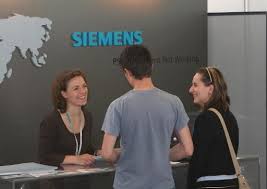 Assess the purpose of strategic human resource management activities in an organization (Siemens case study)
The key purpose of developing a strategic human resource management is to have an alignment between the human resource strategies and organization’s business strategies. Such integration will help an organization in attaining sustainable competitive advantage. Integration in human resource signifies an alignment between the human resource policies and the policies of other business operations in an organization such as finance, informational technology, marketing, production to cite a few (Vedd 2003). However, the purpose of designing a strategic human resource management is not only having an integration between HR and corporate strategy rather the aim is also to have an integration between decisions regarding the organization’s personnel with the expected output of the organization. An organization need to align human resource management with the corporate planning system, focus on the human resource activities that will help in the accomplishment of organizational goals and should undertake actions that will help in building strong personnel-management relationships (Dhar 2008).
Pl see more at http://www.findtutoronline.net
Suggestions & Feedback are most welcome.
Explain the link between strategic management and leadership
Strategic management is defined as decisions taken by the managers in framing strategies in a way so as to augment organization’s performance and achieve competitive advantage (Thompson & Martin 2010). Strategic leadership is referred as potentiality of a manager to utilize strategies and attain mission and vision of an organization as well as to guide and motivate other members of the organization to achieve organization’s objectives (Hill & Jones 2012).
Both leaders and managers act in the organization to achieve the common goal of the organization. Where managers are concerned about shaping strategic ideas and plans to achieve organizational goals leaders are concerned about undertaking strategic actions to attain the goal. The linkage between strategic management and leadership can be well described using the Drotter pipeline model which identifies six key passages through which a leader grows and is also helpful for the management to develop leaders in the organization (Charan et al. 2010).
As per the pipeline model in case of first passage that is transition of a leader from managing self to managing others, organization need to ensure that the leader understands what is the organization’s expectations. At this passage a leader need to develop effective communication skill, able to handle conflicts, delegate work properly and should seek 360 degree feedback for own improvement. In case of transition from managing others to managing managers, a leader should inhibit the role of a coach and mentor. Leader should be able to create a competent team and use organization resources effectively. In case of third passage from managing mangers to functional manager, a leader need to think and act strategically and should be aware of the recent trends. In the fourth transition from functional manger to business manager, a leader needs to have a shift in values and perceptions so as to handle the entire business functions. During the fifth passage, from business manager to group manager, a leader need to have the capability to broader long term goals of an organization and undertake strategic decisions. In the sixth transition from group manager to enterprise manager that is the CEO need to be responsible for building leadership, implementing various decision making methods to cite a few (Charan et al. 2010).
Siemens needs to apply the Drotter pipeline model to overcome the leadership issues in the organization such as the case of bribery (News 2012). Moreover, organization needs to improve the link between management and leader since employees are reluctant to report to the management in case of any operational issues (The Economists, 2014).
See more at http://www.findtutoronline.net/blog
Suggestions & Feedback are most welcome.
Resistance to change in simple words can be defined as opposition exerted for not accepting a proposed alteration in existing set up (Lewis, 2011). Resistance towards change is mainly triggered among individuals because of two reasons. One is the fear of unknown that change will bring in and secondly the anticipations of effects that might alter the comfort level of individual in their present circumstance under changed environment (Heinrich, 2004). Resistance to change in organization occurs primarily in circumstances when particular set of organizational stakeholders are not in favor of a change that is to be initiated. They in such a scenario depict apathetic approach by not accepting and espousing change. Resistance to change in organizations is generally not accepted and considered to be negative phenomenon (Lewis, 2011). But on the other hand this resistance provides for a scope to organizations to review change strategy and make modifications based on stakeholder criticisms and thus implement an improvised strategy (Ford & Ford, 2010).
Change is a natural phenomenon and bound to occur but human acceptance towards change in generally low due to which it is resisted. Change in organizations in undertaken as an approach to deal with external environmental factor which generally results in higher efficiency and effectiveness of employees (Phillips & Gully, 2013). But on the other hand, this change can be stressful and have other negative consequences thus affecting employee productivity and motivation adversely (Phillips & Gully, 2013).
When changes were initiated in Fiume Ceramic by Leveoak after its takeover the same were resisted by existing employees of Fiume. The reasons to resistance can be categorized under 3 heads as explained below:
Job Considerations: The existing ceramic designers and creative specialists were trained in traditional pottery and thus lacked skills in dealing with modernized approach which was prevalent in USA. The inability and fear of not acquiring right skills for using new technology was their major consideration.
Personal Considerations: Ceramic designers and creative specialists were very closely knit with the heritage and tradition of Florence of which they were very proud of. When the change was initiated it was difficult for them to compromise with such rapid changing culture that hampered their personal beliefs in their traditions.
Social Factor Considerations: The thought of shifting to a new land that is USA which required settling in different culture was a major social factor that resulted in employee resignation. This required employees to move out of their comfort zone and start afresh.
The change process adopted by Leveoak in Fiume Ceramic was sudden and executed in an unplanned manner which resulted in such massive discontentment among employees. Leveoak overtook Fiume as a part of its expansion strategy when the company suffered financially in 2014. This was a sudden opportunity that was materialized by Leveoak. The main aim of Leveoak after takeover was to bring about a complete change in organizational culture which had been ruling Fiume Ceramic for more than 115 years. In order to do so, Leveoak implemented a series of changes for ensuring that the loss making organization converted itself into a profitable one in quick span of time. In pursuit of the same Leveoak put into operation cost cutting mechanisms like sourcing resources from China and shifting manufacturing to USA which resulted in employee resentment.
The employees prior to the takeover of Fiume Ceramic by Leveoak experienced very little change and thus over the time developed a very rigid attitude against changes. This change was executed as an immediate reaction to prevailing conditions in Fiume without undergoing much research. The employees within Fiume were more of inert recipient of change strategy rather than being an active contributor in the same. As employees were not sure about the outcomes of change they resented the same. Further they developed a feeling of losing their organizational rich old heritage which added to their fears. Overall the change process adopted by Fiume was very aggressive and not planned which resulted in a chaotic condition within the organization.
As an alternate change management strategy, Leveoak should resort to planned and deliberate strategy (Hill & Jones, 2011). The main purpose of such strategy is to pursue change as a part of organizational long term strategic approach rather than a sudden one.
For more info, http://www.findtutoronline.net
Suggestions & feedback are most welcome
At http://www.findtutoronline.net we provides services for Matlab Programming,Coding for different masters level assignments & also online tutoring via Skype. In Matlab coding , there are different parameters like Bio-medical Image processing like CT SCAN,MRI,BREAST Cancer of Females body, Brain cancer etc should be tested with Image processing. There are various inputs to be given through Matlab programming, with that Inputs u can get the outputs,Testing & then the results come out.
I am attaching one coding programming through Matlab software which shows different phases of our Training.
For more info , Pl do visit http://www.findtutoronline.net
Suggestions & feedback are most welcomeMATLAB CMD CLASS 4
Strategic Analysis: Internal & External
SWOT Analysis:
Strengths: Brand image is a key strength of Starbucks. It has successfully created awareness for the specialty coffee category while maintaining superior brand recognition even without heavy advertising.
Another strength lies in its strong market position and global recognition. Starbucks has a significant presence across the globe and has operations in over 60 countries. Starbucks is also the most recognized brand in the coffeehouse segment and is ranked 91st in the best global brands of 2013 (Interbrand, 2013). This helps the company to gain significant competitive advantage in expanding internationally and gain higher growth domestically and internationally. Over the years, they have achieved commendable economies of scale with superior distribution channels and supplier relationships.
Moreover, they give prime importance to the product quality in spite of a higher production output (Starbucks, 2013). Store location is another strength. They target premium, high-traffic, high-visibility locations near a variety of settings, including downtown and suburban retail centers, office buildings, university campuses, and in select rural and off-highway locations across the world (Starbucks, 2013). The main aim for the firm is to make their stores a ‘third place’ besides home and work (Starbucks Website, 2014).
Starbucks has great employees. They enjoy benefits like stock option, retirement accounts and a healthy culture. It was rated 91st in the 100 best places to work for by Fortune Magazine (CNN, 2013). Social responsibility initiatives by Starbucks create great goodwill. They build goodwill among communities where they operate (Starbucks, 2014). Starbucks has a diverse product portfolio that caters to all age groups (Globaldata, 2013). Starbucks uses technology effectively. They make significant investments in technology to support their growth every year (WSJ Blog, 2013).
Weaknesses: While Starbucks differentiates its products with high quality and a Starbucks experience, the premium prices could prove as its weakness in developing countries. Moreover, their aim to expand rapidly might make them lose their uniqueness due to overcrowding and saturation. Another weakness is that 75% of its profits are based off its coffee products and other specialty beverages (Starbucks Corporation, 2010).
However, its weaknesses don’t outweigh its strengths, which is a positive thing.
Opportunities: There is an opportunity to expand into emerging & developing markets. India has recently joined the list with a joint venture entry (WSJ, 2013). They can leverage their size, experience, financial prowess and efficiencies to make new market share (Forbes, 2013). Moreover, there is an opportunity to expand their product mix. Starbucks has started to expand their product mix by venturing into the Tea and fresh juice product offerings with a smart acquisition strategy (Seeking Alpha, 2012).
Threats: Increasing competition from Dunkin Brands, McDonalds, Costa Coffee, Pete’s Coffee etc is a key threat. Another threat is price volatility of high quality coffee beans, which is not under Starbucks’ control.
Overall, Starbucks has more opportunities for business than threats.
Porter’s Five Forces: Porter’s Five Force Model allows for proper identification of the landscape of the industry (Thompson, Strickland, & Gamble, 2007).
Suppliers: Starbucks understands the importance of the health of the overall supplier ecosystem (Iansiti et al, 2004). Supplier relationships are treated as partnerships. Since the high quality coffee beans that Starbucks uses as inputs are scarce, the threat by suppliers is Moderate.
Customers: Since the product offerings and the brand are highly differentiated, Starbucks faces a very low threat of customers. 80% of Starbuck’s revenue comes from regular customers who visit an average of 18 times/month (Rae & Jeneanne, 2006). Moreover, Starbucks is able to drive consumer preferences and knows how to move a product upscale, thereby making the threat from customers Low.
Competitors: It is hard to define a basis for competition for Starbucks. Analysts identify Dunkin Donuts, McDonalds, Nestle and Caribou Coffee as Starbucks’ competitors (Hoovers, 2014). The competitors are growing and expanding rapidly as well. Hence, the threat from competitors is moderate to high due to the increasing number of companies competing along undefined lines.
New Entrants: Entry barriers in this industry are not high enough to discourage competition. However, Starbucks has developed skills, competitive positioning, knowhow and consumer base which is very difficult for new entrants to create. Thus, the threat of new entrants is Low, but that doesn’t mean complacency for Starbucks.
Substitutes: On a product level, substitutes include tea, soft drinks, energy drinks, smoothies etc. Starbucks sells these in its stores as well, thereby eliminating the threat. On a venue level, the substitutes might be the experience that customer can have at other bars and cafes. Despite this, a person who wants that particular environment will always choose the coffee shop over other substitutes; therefore, the threat is low.
Suggestions & feedback are most welcome.