Accounting Questions & Answers For MBA Professionals of A Foreign Universities at Academic Research Writing Services

In the past few years, the market of mobile phones and mobile accessories has seen a sudden surge in terms of both popularity in the market and the variety, thereby contributing heavily to the growth aspect of the mobile phones. The leas and bound that the mobile market has taken in the last few years especially in the developing nations such as India has been a very direct source of employment thus income to the national economies thereby resulting in great employment opportunities, revenues and the increased GDP of the nation (Chowdhury et al, 2010). The contribution of the mobile business in contributing to the GDP of India has been quite noticeable and there are many global companies which have made huge prediction regarding the same as well. According to McKinsey, in the next ten years in India, 350-550 million people are expected to be connected via the mobile internet technology thereby resulting in a contribution of $550 billion to $1 trillion to the GDP (Hindu Business Line, 2015). In other words, he staggering figures are close to account for almost 20 to 30 % hike in the GDP figures and close to 3-6 times the contribution to the GDP in the present scenario (Hindu Business Line, 2015). Though the above mentioned figures and predictions seemed to usher the Indian economy in to a mode wherein there lies a bright future for the mobile technology and the Indian economy, none of this can be true if the aspect of Indian consumer behaviour was not taken into account.
In the last couple of decades, there has been an increase in the aspect of the effect of various factors on the consumer behavior in India in order to study the phenomenon. India is a land of many states and each of these states has its own culture. This land of multiple cultures thus tends to influence the aspect of consumer behavior in a variety of ways. The fact of the matter here is that different cultures have influenced people in ways which this research paper will investigate. The market is full of a variety of options when it comes to mobile phones. The mobile phones that are available in the market and are also the preferred choice in terms of mass demand is of the ‘smart phone’ variety than the old model which are not ‘smart’ and getting obscure by the day (Mooij and Hofstede, 2011).
There was a time when mobile phones were considered to be a luxury rather than being a necessity. However, in the last few decades the scenario has turn a complete turnaround. Today the use of smart phones is predictably so enormous that the sales of non smart phones are limited. Smart phones have been instrumental in joining people from different parts of the world. There is an immense use of smart phones when it comes to being connected via the internet (Tossel et al., 2012). In this modern age of the internet, being connected has become all the more important as there are many online social applications networking platforms which are used by people to stay connected despite the huge geographical differences. Apart from staying connected there are a variety of other uses such as that of health care benefits that can be reaped by people when they have a smart phone (Boulos et al., 2011). In short, what started as a luxurious items has slowly but surely transformed the face of the telecommunication sector in India. It has acquired nothing less than a cult status in the market. People tend to vie with each other in order to be a proud owner of the most smartest cell phones available at that point in time.
 Overview of Indian Market
Of all the world economies that are growing at a fast pace, there is no doubt that Indian economy tend to be a part of that list. The fact that the country’s economy is a part of that list is a testimonial to the fact that development is the keyword in the region. No development in the current scenario can be complete without the telecommunication industry and the kind of contribution it has made toward the country’s economy. The usage of mobile phones has increased in the past few years and is set to be even more in the years few years as well (Financial Express, 2013). The Indian market has been an open arena for a variety of mobile phone companies which tend to be eager to launch their products in the Indian market. Owing to this trend, the Indian market has undergone a great change and has become more competitive. It is this competition amongst the various players in the Indian market which makes the base for the research all the more interesting. With so many competitors around, it is indeed interesting to know the extent of the impact of the various parameters which define Indian consumer behaviour when it comes to smart phones. The research study includes all the probable factors within reason which may contribute to effect Indian consumers when it comes to buying smart phones in the Indian context.
Indian Smartphone market is predicted to grow because the 3G network coverage is increasing and there is increase in demand of high in smartphones in 2014. Smartphone manufacturer square measure targeting building application stores and rising service quality to offer a gorgeous worth proposition and strengthen their market position. The Indian market was dominated by Nokia phones (3Q2013, 2013). Different brands like Motorola, Samsung, Sony and LG didn’t vie with Nokia phones as Nokia phones square measure easier to use as compared to the cell phones of different firms. Now, Samsung is that the main player in Indian Smartphone market with 1/3rd of Indian market share. Indian brands like Micromax and Karbonn square measure at the second and third position in market share with twenty first and 100% world firms like Sony, Nokia and Apple square measure hierarchical fourth, fifth and sixth (3Q2013, 2013).
For more info, Pl do visit at http://www.findtutoronline.net
Suggestions & Feedback are most welcome.
An American option can be exercised on any business day within the life of an option including the expiration date. European option can be exercised only at the expiration date. The key difference between American and European options relates to when the options can be exercised:
Options contracts traded on future exchanges are mainly American-style, whereas those trade over the counter are mainly European.
Nearly all stock and equity options are American options, while indexes are generally represented by European options. Commodity options can be either style.
Traditional monthly American options expire the third Saturday of every month. They are closed for trading the Friday prior. *Expire the third Friday if the first of the month begins on a Saturday.
European options expire the Friday prior to the third Saturday of every month. Therefore they are closed for trading the Thursday prior to the third Saturday of every month.
An investor holding an American-style option and seeking optimal value will only exercise it before maturity under certain circumstances. Owners who wish to realise the full value of their option will mostly prefer to sell it on, rather than exercise it immediately, sacrificing the time value.
European options are typically valued using the Black–Scholes or Black model formula.This is a relatively simple Partial Differential Equation equation with a closed-form solution that has become standard in the financial community. There are no general formulae for American options, but a choice of models to approximate the price is available
Where an American and a European option are otherwise identical (having the same strike price etc.), the American option will be worth at least as much as the European (which it entails). If it is worth more, then the difference is a guide to the likelihood of early exercise. In practice, one can calculate the Black–Scholes price of a European option that is equivalent to the American option (except for the exercise dates of course). The difference between the two prices can then be used to calibrate the more complex American option model.
For more, Pl visit at http://www.findtutoronline.net
Suggestions & Feedback are most welcome.
The Smartphone market is always alive and booming, thanks to the excellent product innovations by the mobile companies. Today’s consumer has access to the entire pool of information through various sources, especially the Internet and hence they are well equipped with desired info while researching and evaluating different alternatives before making the actual purchase. Due to this, Smartphone companies are compelled to invest significantly in R & D and come up with super competitive products. Despite rising prices of high end smart phones, there is an ever rising demand for smart phones. Smartphone companies also have been coming up with cutting edge innovations and hence, the consumer gets to choose between a wide range of high end smart phones. In the last few years, Samsung has emerged as a key player in the Smartphone market and has managed to grab a huge chunk of the market share. At the same time, the sales of some brands which used to be major players in the Smartphone market once, have dipped considerably.
Across Europe*, Android remains the number one OS with 73.3% share. Apple is second with 16.6% share and Windows third with 8.1%. *The big five European markets includes UK, Germany, France, Italy and Spain. (Kantar Worldpanel ComTech, 2014).
In Italy, the smart phone penetration in 2013 was 41.3% compared to 27.9% in 2012 (Our Mobile Planet, 2013). With tremendous increase in smart phone usage in recent years, people consider various factors while they decide to purchase a smart phone. A consumer’s buying behavior is influenced by cultural, social and personal factors (Kotler & Keller, 2012). Consumer behavior might be affected by many factors like individual motivations, attitudes, values, needs, personality traits, social and cultural background, sex, age, professional status and some social influences by family, colleagues, friends and society. This study aims to assess the consumer buying behavior of Samsung Galaxy Note 5 compared to other smart phones in the Italy market. The study is primarily focused on customer buying behavior, consumer’s needs, evaluation of the alternatives and their post purchase satisfaction. The study also covers the existing Samsung Galaxy Note 5 customers, their assessment of its performance and areas for improvement. The study involves qualitative and quantitative research through focus group discussions, interviews, surveys, etc. Moreover this research also takes us through the five step decision making process of consumer purchase. The entire consumer’s purchase process can be classified into a five step problem solving process namely need recognition, information search, evaluation of alternatives, purchase and post purchase behavior. This five stage decision making model is most appropriate for the consumer behavior of purchase decision for complex purchases. In the same manner, purchase decision for smart phones follows the same process but in some cases, the buyer decision can also be affected by specific bias associated with some brands. A lot of decision behavior exhibited by consumers can differ from one person to another because they may use different processes to choose rather than only using mathematical modeling (Swait and Adamowicz, 2001). Purchase decisions of many consumers may be affected by both rational factors as well as emotional factors. A younger consumer would prefer emotional features over rational features in smart phones (Wilska, 2003). This makes it apparent that there can be numerous factors that affect a consumer’s desire and inclination to purchase a Samsung Galaxy Note 5 over other smart phones available in the market.
The objective of this research is to understand consumer purchase patterns and what they expect from smart phones so that the information can be used in relevant product launches. This research also aims to identify the opportunities and market gaps where Smartphone companies can position their products to tap those segments. This study also intends to identify the perception of Samsung Galaxy Note 5 Smartphone among the consumers and incorporate the data for future researches on similar lines.
For more Info : http://www.findtutoronline.net
Suggestions & Feedback are most welcome to apply.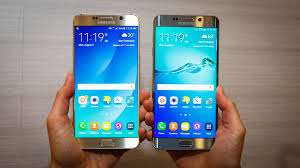
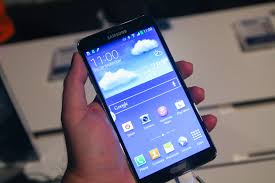
Samsung Galaxy Note 3 is the latest addition to the Note Series. It is a Phablet, a combination of phone and tabletlaunched on 4th September 2013 by the Korean electronics giant Samsung. Note 3 is an Android light-weight smartphone with a larger HD screen and an elegant design unlike its predecessors. The Samsung Galaxy Note 3 includes Android 4.3 Jelly Bean system and quad-core processor, improved Wi-Fi with mobile calling facility, and improved pen-enabled features and pop-up applications. A longer battery life with up to 25 hours talk time and standby time up to 420 hours for 3G devices is advantageous. Looks wise, it has a smooth plastic leather back cover with a faux metallic base. Samsung also improved the navigation system of Note 3 to add a more user-friendly interface. Note 3 has a front facing 2-megapixel camera for taking self-portraits and for video chatting and 13-megapixel rear camera for taking great snaps(NDTV Gadgets n.d.).
The aim of the study is to analyze the marketing and product strategies of Samsung Galaxy Note 3 vis-à-vis the competitors. The objectives of the study are:
The global sales of tablet in 2013 witnessed a rise of 50.6 percent over last year with Apple retailing its market leadershipand Samsung chasing next (Agence France-Presse 2014). Though the phablet market is growing but developed consumer markets like US and UK are nearing consumer saturation. The growth is attributed to the emerging new markets which indicate slow yet consistent growth.Here is the preference is for low-end smaller screen Phablets running on the Android operating system. This offers tremendous growth opportunities for the “Note” series of Samsung. However, the ever changing consumer demands and preferences make it a challenge to produce an innovative product. The study intends to identify the reasons why Samsung is unable to outdo Apple and up to what extends it has adopted product innovation to deliver maximum customer value.
The research methodology adopted for the research is that a qualitative study based on secondary data. The research approach is deductive in nature as deductions are made on the basis of general findings about the case product. The inferences drawn are primarily analytical in nature.
The following are the key sources of the secondary research:
-Newspaper Articles and Journals
-Published Marketing Journals and Institutional Reports
-Magazines and other information portals
-Weekly issues, Books of famous authors
-Analysis and Reports of consultation firms
For more info, Pl do visit at http://www.findtutoronline.net
Suggestions & feedback are most welcome.
SMEs are the important part of economic systems. In fact, in last four decades, focus has been shifted towards SMEs due to their crucial role in the growth of industries and overall economic conditions of countries (Atik, 2012). However, SMEs do not strategically adopt planned approach of internationalization. Therefore, to analyze these approaches, this report will critically discuss different options available to SMEs. In addition, challenges of moving towards geographically or psychologically distant markets will be also evaluated. It will provide an overview about the advantages and disadvantages of using different strategic approaches by SMEs.
Strategic Approaches : SMEs have become an important part of emergent nations. It is so, as they are not observed as the miniature of large MNCs, but are referred as the small firms with their own identities.
Economic Approach:
According to this approach of internationalization, SMEs can extend their international activities within the vertical integration (Laghzaoui, 2011). Similarly, as per the transaction cost theory developed for advancing the economic approach of internationalization, organizations can also make selection between externalization and internationalization of their activities. Following are the advantage and disadvantages of this approach:
Advantages: The advantage of using economic approach is ownership advantage. By using this approach, SMEs can accumulate tangible assets including experience and technological capabilities (Ruzzier and Konečnik, 2006). For example, SMEs operating in the hotel industry of Slovenia dominated the country due to the domestic conditions and size of the country (Ruzzier and Konečnik, 2006). By moving towards a geographical location, SMEs can take location advantage due to productive and institutional factors. Internalization advantage can be taken by SMEs by managing or coordinating their business activities effectively. For example, Metsch Refractories has become UK leader, as it selected European market to pursue its internationalization process (Cui, Walsh and Gallion, 2011).
Disadvantages: The drawback of using economic approach is the difficulty or issue in extrapolating the theoretical contributions for SMEs due to their context. In addition, major role of social relations in transactions is also not considered in economic approach of internationalization. Furthermore, the lack of managerial competencies, financial, physical and technological resources can also restrict SMEs to go international. Hence, all these are disadvantages of employing the economic approach.
Success Strategy: By using technological competencies and experiences, SMEs can take ownership advantage. This ownership advantage can be used to attain success for the process of internationalization by the SMEs. Along with this, by moving towards geographical locations that have promising productive or institutional factors, success probability can be increased by SMEs. By managing and coordinating activities internally, it is possible for the SMEs to enhance their success chances to become international. With the help of productive resources, SMEs can also improve their access to market abroad. Utilization of critical resources can also assure success for SMEs in the future. Therefore, by following or adopting all these strategic moves, SMEs can attain their intended goals within timeline.
Opportunistic Portfolio Approach:
According to this approach, internationalization process is followed by using diversification strategy. In this approach or model, SMEs can reduce their risk by entering into several countries in a simultaneous manner. For example, B2B high technology firms operating in food industry, paper, petrochemical and pharmaceutical in Nordic attained success due to this approach (Smolarski and Wilner, 2005). Following are the advantage and disadvantages of using this strategic approach of internationalization:
Advantages: By using opportunistic portfolio model, SMEs can avoid or minimize risk of doing business internationally. Hence, this approach is best suitable for SME entrepreneurs who want to control risk while making business decisions.
Disadvantages: The drawback of using opportunistic portfolio model is associated with the behavior of entrepreneur. For example, if the entrepreneurs apply a speculative behavior, it becomes difficult to leverage opportunistic portfolio model. So, this model or approach of internationalization is only successful for investor behavior. For example, FCX Systems was domestic, but it got chance to become international when it got a customer from China, but it did not pursue other countries for internationalization (Cui, Walsh and Gallion, 2011). So, it proved difficult for the company.
Success Strategy: By using opportunistic portfolio model, risk related to the resources, technological, economic or socio-cultural can be controlled. Hence, the SME entrepreneurs only want risk reduction in their business ventures. In this manner, success chances can be maximized. Along with this, by doing business in two or more countries that present equal risks, it is possible to control risk and take benefits of success simultaneously by the entrepreneurs. It is so, as if business is done in single country, it can leave the entrepreneurs in trouble due to higher risks.
Network Approach:
According to this approach, position of the organization in its network plays an important role in the process of internationalization. This approach is also based on Uppsala model, but now improved. For internationalization, there are three defined stages that are prolongation, penetration and integration. With the help of prolongation stage, network can be integrated. Penetration can be defined as the stage of developing the position and increasing its commitment and resources.
Furthermore, in the integration, the organizations are linked up to national networks. It helps to coordinate business activities for advanced internationalization. In addition, with network approach, SMEs can also become main actors once they acquire required experience and knowledge of foreign markets.
By using network, technical, financial and commercial relations are developed with other organizations. It further assists in becoming international at wider level for the SMEs. For example, by using customer contact and feedback, Metsch Refractories ventured into UK market for internationalization. It proved helpful for the company to expand its business (Cui, Walsh and Gallion, 2011).
For more info : http://www.findtutoronline.net
Suggestions & feedback are most welcome.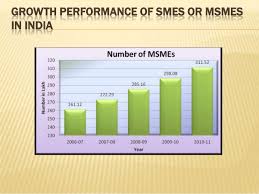
The global supermarket retailing is expected to grow at an increasing rate. It is projected that in between 2014 and 2020 this industry will grow at 6.1 % CAGR (Persistence Market Research 2014). The industry is projected that by the year 2020 the industry will reach the value of 8,541.9 billion USD (Persistence Market Research 2014). This lucrative business option is motivating companies from across the world to expand their business and thus reap benefits from same. One of the most interesting markets to tap is India. India is accredited from being one of the nations with fastest growing middle class with approximately 149 million being categorized as middle-class households (Persistence Market Research 2014).
In this paper the marketing plan for Tesco Plc (from UK) is developed to determine its marketing mix for entering Indian markets. In order to analyze the prospects of Indian markets, a detailed analysis of overall market is done using varied theoretical models. For current market scenario PESTLE analysis is adopted. Competitor’s analysis is done through Porter’s 5 forces model. Internal and external analysis specific to Tesco Plc using SWOT model is adopted. Based on findings from these models, the marketing mix is proposed for Tesco Plc in order to enter and operate successfully in India.
TESCO which is a public limited company was set up in the year 1919, in Cheshunt, UK (Tesco 2015a). The company was founded by Jack Cohen. The first store was set up in Burnt Oak in the year 1929 (Tesco 2015a). TESCO ranks as number one retailer in the UK retail market and is considered to be among top retailers in the global market. TESCO including its subsidiaries have stores which are more than 6200. The company has its global presence in 14 countries in Asia, Europe as well as North America. Some of the TESCO banners are TESCO Express, TESCO Extra superstores, TESCO Metro, One Stop Convenience stores, Homeplus hypermarket, virtual stores in South Korea, small express and Dobbies gardening stores in the Scotland, UK and Northern Ireland (Hoovers n.d.). The company has human resource of 72000 employees to deal with TESCO’s retail business such as clothing, books, furniture, software, petrol, financial service assistance, telecom, music downloads and DVD rentals (Tesco PLC 2015). The mission of the company is to generate value for its customers and to gain customer’s loyalty for long term. The company motive is to provide assistance to its employees and customers so as to retain and create strong relationships (Tesco PLC 2015).
The overall market analysis on Indian markets for Tesco can be undertaken through macro-environmental analysis that is PESTEL analysis. PESTEL analysis will aid in determining varied aspects and issues of Indian markets with special reference to political, environmental, socio- cultural, technological, legal and economic factors (Bowhill 2008).
Politically India is experiencing a complete makeover with new government drafting new policies for overall development of the country. The Indian government has been promoting retailing industry in India and lieu of the same it allowed 100% foreign investments into India enroute wholly owned single-brand in the year 2012 (Lok Sabha Secretariat 2014). Upto 51% FDI is allowed in multi-brand retailing but under specific circumstances thus limiting the scope of FDI investments in India (Lok Sabha Secretariat 2014). Though this seems to be a positive signal for companies like Tesco to enter into Indian markets but yet with launch and promotion of ‘Make in India’ they are likely to face huge political barricades (Irani 2015).
Environmental concerns among Indian consumers are rising which is evident in their augmented consciousness while taking spending decisions. They have been demanding eco-friendly products along with eco-labeling in accordance to national and international standards (World Wide Fund for Nature 2014). Overall the environmental concern in India is comparatively low as compared to global consumers.
With the emergence of youth population and rising middle-class in India, the socio-cultural factors affecting Indian shopping trends and attitude towards retailing is under a revolutionary change (Chandrasekhar et al. 2006) (Jeffrey 2010). A transition from kirana shops to organized retailing is been experienced which gives ray of hope to retailers like Tesco (Atulkar & Kesari 2014). The shopping behavior of Indian consumers is also changing owing to changes in their lifestyles and social status. This in turn affects their consumption patterns. Further India is a home for multiple cultures and sub-cultures which drive its consumption pattern (Sikri & Wadhwa 2012). Due to the presence of such huge cultural diversity marketers face difficulties in adopting a single model or strategy to cater Indian consumers.
The major technological factor that considerably is responsible for success or failure of retail stores in any nation is supply chain management. The SCM in India is highly under-developed and is insufficient too to cater growing needs organized retailing in India (Sikri & Wadhwa 2012). Further unavailability of appropriate infrastructure and inadequate distribution mechanisms adversely affect organized retailing in India.
Indian retail industry is under strict surveillance as it si guarded by a number of laws namely Shop and Establishment Act, Standards of Weights and Measures Act, Provisions of the Contract Labour (Regulations and Abolition) Act, The Income Tax Act, Customs Act and The Companies Act (DnB n.d.). Along with it, the retailers need to abide by rules and regulations prevalent at regional level which further complicates and confines development of organized retailing. Slow and cumbersome legal processes discourage retailers from entering into such a lucrative industry.
The purchasing power of Indian consumers is expected to be 6 trillion USD by 2015 which is considered to be the 3rd leading following USA and China (Times of India 2011). The retail industry is considered to be of great importance for Indian economy as it contributes approximately 33%-35% towards GDP and is anticipated to mature by 25%-30% per annum (Sikri & Wadhwa 2012). Organized retailing in India only forms 5%-6% thus depicting huge scope for international companies like Tesco to cater Indian consumers (Sikri & Wadhwa 2012).
For more info, Pl do visit at http://www.findtutoronline.net
Suggestions & Feedback are most welcome.
For more info, Pl visit at http://www.findtutoronline.net/blog
Suggestions & Feedback are most welcome.
In context of the marketing practices implemented in the operation domain of airline businesses, this essay is making an insight into the role of sponsorship in case of the Emirates Airline (EA). The basic concentration of this paper is to understand the role of sponsorship in terms of operations in airlines as well as related airports. The idea is to explore and comprehend the factors of sponsorship that are responsible to paving the road of success for an organisation. The case of Emirates Airline (EA) has been selected for the critical analysis of the success attained by the selected company in aviation marketing.
The ownership of Emirates Airline (EA) is in the hands of the Corporate Investors working under the Government of Dubai, UAE. The official declaration of Emirates Airline (EA) in their Annual Report of 2015 declares that it has been recognised as the largest airline organisation in the entire Middle East, with an operating expansion of 3,300 flights/week from Dubai International Airport. These flights are to 78 nations spread all over the world (Emirates Airline, 2015). As reported by Frontier Economics (2015) since 2014, the flights of Emirates Airline (EA) are increased by 29 airports in selected 28 cities of EU28. This operation comprises of 700 flights operating per week in both the back and forth directions. The success story of Emirates Airline (EA) in Europe appears very important in terms of gaining developed route network, which is responsible for connecting many cities of the world through Emirates Airline hub in Dubai.
In the words of the official declarations made by the The Emirates Group, the history of Emirates comprises ‘incredible development’ and is ‘fascinating. The Emirates (2015, a) refers the history of Emirates Airline (EA) back to 1980s. during the mid of this decade, the Gulf Air started cutting back most of its services to channelised to Dubai. It is at this position, that Emirates came into being in the month of March of 1985, that specifically was supported and backed up by the royal family of Dubai. The collaboration was initiated with Pakistan International Airlines offering a minimal of two airline aircrafts at wetlease. In order to gain independent operative hold, the government subsidies were considered along with $10 million as the capital investment. These developments were initiated by Ahmed bin Saeed Al Maktoum as the head and the current Chairperson of Emirates Airline (EA). Emirates (2015) states that it hardly took any time for Emirates Airline (EA) to expand its destinations and fleet. As such by October of the year 2008, Emirates made a huge shift of all its aviation operations to the Terminal 3 of Dubai International Airport. The plans for its rapid expansions and growth are still part of its success story and sustainability in the competitive sky seems like a simple strategy to it.
Pl see more at http://www.findtutoronline.net
Suggestions & Feedback are most welcome.
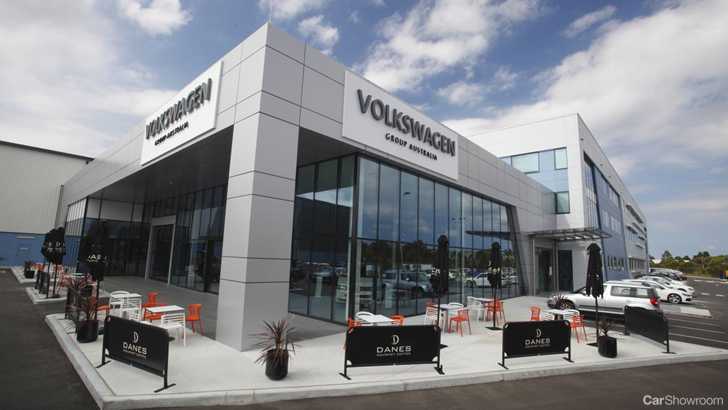
The marketing development of Volkswagen Group in last 5 years has attained enormous attention in the automotive industry in a worldwide basis. The strategic approaches of the company are noteworthy in terms of accepting innovation, transformation, quality-oriented specifications, CSR based programs and the ultimate goal of sustainability in the international market.
This report makes an environmental scanning of marketing management of Volkswagen Group on an external and internal basis, to gain in-depth understanding of its marketing strategies for attaining success. Implementation of PESTEL analysis, investigates the Political, Economic, Social, Technological, Environmental and Legal factors of the company. Further analytical tools like SWOT and TOWS Matrix added to this audit report for the better knowledge about the marketing management of Volkswagen. In this approach the Strengths, Weaknesses, Opportunities and Threats related to the organisational set up of Volkswagen are examine in a balanced way.
The nest approach of this audit report is to gain empirical facts related to the process of managing consumer and stakeholder’s expectation and adding satisfaction to them. In this approach, the innovative ways of integrated technological support and management of financial dividend provisions are considered specifically. A comparative and competitive zeal of Volkswagen has been noted here, as against its competitors. Lastly, with a conclusive note the report offers two very important recommendations to the company for gaining further growth in future.
Since 2013, Volkswagen Group emerged as a strong automobile company and was determined to be the leader in its sector. In 2014, in the Annual Report 2015, Volkswagen declared that the unit sale made +5% leap from 9.73 million to 10.22 million automobiles and made the company second best organisation in the international automobile market (Volkswagen, 2015). As declared by the Volkswagen (2015) Factbook; the company is noted for being ‘the most successful multibrand group’ in the international automotive industry with its 12 brands like, Volkswagen Passenger Cars, Volkswagen Commercial Vehicles, Audi, Lamborghini, Ducati, Porsche, etc. the company gained an expansion of 153 nation in last couple of years. Developments noted in a nutshell below –
Source: Volkswagen (2014)
In fact, the approaches are critical and this paper aims in offering a comprehensive understanding of the same. It will be accomplished by illustrations made through systematic analyses led by the implementation of PESTEL, SWOT and TOWS approaches. Moreover, apart from the in-depth environmental scanning an analytical pursuit will be offered regarding the management approaches of Volkswagen in handling its customers, competitors and the stakeholders.
This current marketing audit on Volkswagen, offers a balanced environmental scan, in order to understand the practical way of maintain right kind of management strategy by the company in the international market. The purpose of the environmental scan aims in reviewing all the latest and the anticipated concerns that lay serious impact over the respective organization. All these selected factors remain inclusive of investigative threads managed for understanding economic, political, demographic, legal, etc of the organisational operative approaches (Jeffs, 2008).
Following the declaration of Kotler (1982) about marketing audit being independent, systematic, and comprehensive, this research too leads the assessment threads of analysing environment scanning of Volkswagen in a very objective and resourceful manner. The external or macro environment of Volkswagen gets analysed through the application of PESTEL and the internal or micro environment gets assessed through the implementation of SWOTS & TOWS matrix analytical formulations.
for more info, Pl do visit our website at http://www.findtutoronline.net
Suggestions & feedback are most welcome.